- TRAVEL GUIDES
arrow_drop_down
- Canada
- United States
- Sunny Destinations
arrow_drop_down
- VIEW ALL
- BUCKET LIST
- ABOUT
- CONTACT
16 Fun Day Trips From Barcelona
- Barcelona
- Spain
-
Feb 25
- Share post
Barcelona has attractions that’ll keep you busy for days, but some of the best adventures kick off the second you leave the city behind.
These 16 fun day trips from Barcelona will show you there’s so much more to this region than Gaudí and sangria.
1. Montserrat Abbey and Hiking Trails
Montserrat rises about 40 miles northwest of Barcelona, where jagged rock formations cut a dramatic profile against the sky. The Benedictine monastery perched high on these peaks has drawn pilgrims for centuries.
The basilica holds the famous Black Madonna statue, and if you time it right, the boys’ choir fills the space with music that’ll give you chills.
Hiking trails snake through the wild landscape. Take the funicular up to Sant Joan and pick from several marked paths — some are easy strolls, others will have you breaking a sweat. Either way, the views out over the countryside are worth it.
2. Girona’s Medieval Old Town
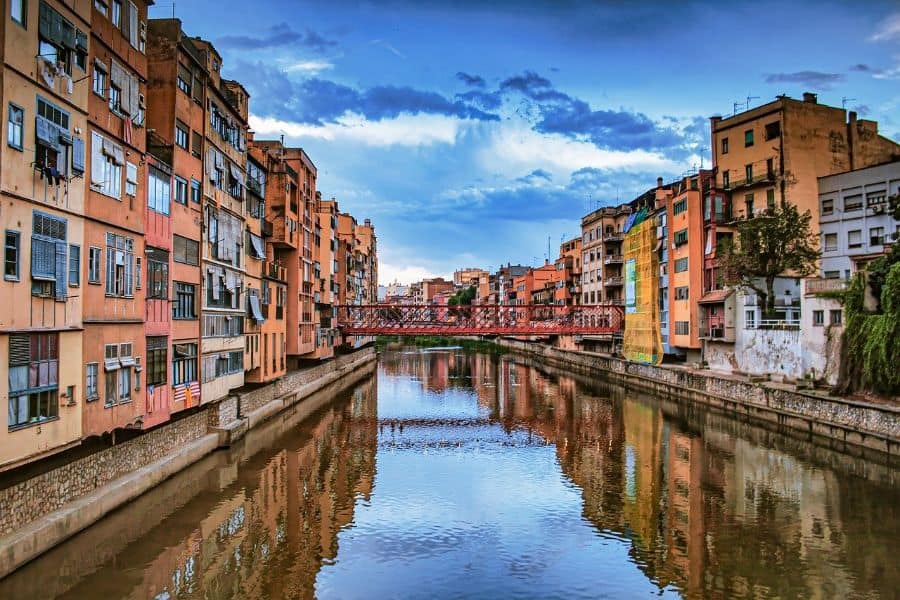
Hop a high-speed train about 40 minutes north and Girona drops you into another era. The colorful houses along the Onyar River are begging for photos, and the Jewish Quarter is a maze of some of Europe’s best-preserved medieval streets.
Climb up onto the ancient city walls for panoramic views, then lose yourself in narrow cobbled alleys where Christian, Jewish, and Muslim cultures once coexisted. The Gothic cathedral’s massive nave and ornate façade are jaw-dropping.
If you’re into Game of Thrones, you’ll spot a few familiar locations around the old town. Getting to Girona by train, bus, or car is a breeze, so it’s a solid day trip option.
3. Sitges Beach and Promenade
Sitges is a coastal town about 30 kilometers south of Barcelona — easy to reach by train, bus, or car in roughly 40 minutes.
Golden sand beaches stretch along the Mediterranean with calm, clear water that’s perfect for a swim. The palm-lined promenade runs right along the shore, and the colorful buildings make it pretty hard to resist snapping a photo.
Nineteen different beaches dot the coast here; some are mellow and family-friendly, while others are a bit more lively and social. The waterfront walkway gives you sea views on one side and a parade of cafes and restaurants on the other.
4. Costa Brava Coastal Villages
The Costa Brava coastline north of Barcelona is pure Mediterranean magic, dotted with fishing villages and rugged views. A full-day trip to Costa Brava from Barcelona lets you hop between villages without wrangling with bus schedules.
Tossa de Mar is a standout with medieval castle walls perched above turquoise water. Wander cobblestone streets lined with whitewashed houses, then hit the beach for a swim or just a nap in the sun.
Lloret de Mar is more energetic, with its beachfront promenade and water sports. The clifftop gardens are a photographer’s dream, offering sweeping views over the rocky coastline. Most tours toss in a scenic boat ride so you can soak in dramatic cliffs and secret coves from the water.
5. Figueres and Dalí Museum
The Dalí Theatre-Museum in Figueres is about 90 minutes north of Barcelona and feels like stepping into the mind of Salvador Dalí. He designed this surrealist wonderland himself, and it’s packed with the largest collection of his works anywhere.
Melting clocks, wild sculptures, and optical illusions that mess with your head. The building itself is a trip — red walls, giant eggs on the roof, the works.
A lot of people pair Figueres with a stop in Cadaqués, the quirky coastal town where Dalí lived and painted. Day trips to the Dalí Museum usually handle transportation and give you time to wander through all the weird and wonderful corners of the museum.
6. Tarragona Roman Ruins
About an hour south, Tarragona puts on a show with some of Spain’s best-preserved Roman ruins. Once the capital of a massive Roman province, Tarraco’s 2,000-year-old amphitheater sits right next to the Mediterranean Sea.
The UNESCO World Heritage Site includes huge walls, an ancient circus, and underground tunnels you can explore. Roman columns peek out from medieval buildings all over the old town.
The archaeological museum is worth a look for its mosaics and statues, giving you a peek into ancient daily life. And after you’ve had your fill of history, the port’s seafood scene isn’t half bad.
7. Vall de Núria Nature Park
High up in the Pyrenees, Vall de Núria sits at almost 2,000 meters (about 6,560 feet) and feels a world away from Barcelona’s buzz. Getting there is half the fun — a rack railway winds through dramatic gorges into this alpine valley.
The peaks around you hit nearly 3,000 meters (9,840 feet), so the views are next-level. In winter, skiing and snowboarding take over; in summer, wildflower meadows and hiking trails call your name.
There’s also a mountain sanctuary with a Romanesque statue of Mary, so you get a nature fix and a bit of pilgrimage all in one.
8. Besalú Medieval Village
Besalú is a little Catalan treasure that drops you straight into the Middle Ages with its iconic stone bridge and winding cobbled lanes. Guided day trips from Barcelona make it easy to get here, often pairing Besalú with other medieval spots nearby.
The 12th-century bridge is a stunner, leading you into a town packed with ancient stone buildings and arched doorways. There’s a set of medieval Jewish baths (one of only three left in Spain) and an old synagogue to peek into.
Romanesque architecture and medieval details pop up everywhere, making the place feel like a movie set. Most tours toss in stops at villages like Rupit or Castellfollit de la Roca. It’s a bit of a trek (about 90 miles north), but if you’re into history, it’s totally worth the day.
View this post on InstagramA post shared by Les Beautés Catalanes Officiel ❤️💛 (@les_beautes_catalanes_off)
9. Sant Cugat Monastery
The Sant Cugat Monastery is just 15 kilometers from Barcelona and dates back to the 9th century. The Romanesque complex is best known for its cloister — 144 carved columns, each telling its own story.
Medieval architecture is everywhere, with detailed stone carvings showing everything from biblical scenes to mythical beasts. The bell tower stands tall above town, a reminder of the region’s deep religious roots.
There’s a museum on-site where you get a glimpse of Benedictine monastic life and check out archaeological finds from the area. Sant Cugat del Vallès is a peaceful escape from the city, but you’re still surrounded by centuries of Catalan history.
10. Cardona Salt Mountain
Head about 90 minutes northwest of Barcelona and you’ll run into one of the world’s oldest and largest salt formations. The Cardona Salt Mountain Cultural Park lets you wander through ancient mines that have been around for millions of years.
Massive underground tunnels show off pink and white salt layers that almost look like something from another planet. Guided tours from Barcelona usually include a stop at the medieval Cardona Castle up on the hill.
11. Colònia Güell Crypt
Just 20 minutes from Barcelona’s center, Colònia Güell is home to one of Gaudí’s most experimental creations. The crypt was built as part of a workers’ colony, and Gaudí used it as a playground for techniques he’d later perfect at Sagrada Família.
Twisted columns and organic shapes make the place feel like a stone forest. You can get here by train from Plaça Espanya in under half an hour — an easy escape from the city crowds.
The industrial village around the crypt gives you a peek at early 20th-century worker life. Audio guides walk you through Gaudí’s architectural experiments, and even if you’re not an architecture buff, it’s fascinating.
12. Cerdanya Valley Ski Day
The Cerdanya Valley has some of the best ski spots, just two hours from Barcelona. La Molina and Masella are the big names here, sharing a lift pass and loads of runs.
La Molina is great for families and beginners, while Masella is better if you’re looking for longer, steeper slopes. The Pyrenees views are unreal, stretching out as far as you can see.
Rental shops are right at the resorts if you don’t have your own gear, and grabbing lunch at a mountain restaurant between runs is a must.
13. Vic Market Town
Vic is about 70 kilometers north of Barcelona, and it’s a solid choice if you’re into history and local food. The train ride is just over an hour; you roll right into the heart of this medieval town, and it’s like stepping onto a movie set.
The Saturday market at Plaça Major has been around since the 9th century. Stalls overflow with fresh cheese, fuet sausages, and all sorts of Catalan treats, spread out across one of the prettiest medieval cities in Catalonia.
After wandering the market, drifting through the narrow cobblestone lanes past faded mansions and ancient facades is half the fun. The Roman temple and Gothic cathedral just crank up the town’s historic atmosphere.
14. Castellfollit De La Roca Cliffs
Perched on a skinny basalt cliff that juts 50 meters (about 164 feet) above two rivers, this tiny medieval village is pretty much the definition of dramatic. The whole place hugs the edge of old volcanic rock, and it’s one of Catalonia’s most jaw-dropping sights.
You can hop on a guided day trip from Barcelona that swings by Girona, Besalú, and Castellfollit if you don’t feel like driving. Thread your way through the narrow streets until you reach the church teetering at the cliff’s edge; the views over the valleys below are wild.
For the best photo, cross the river and look back — the whole village looks like it’s clinging to the rocks for dear life. It’s a quick stop, maybe an hour tops, so it pairs well with other medieval villages nearby if you’re on a sightseeing roll.
15. Sant Sadurní D’Anoia Wine Tasting
About 40 minutes from Barcelona, Sant Sadurní d’Anoia is where Spain’s cava magic happens. The town produces most of the country’s sparkling wine, and wine tours here take you through cool old cellars where you can try cava right at the source.
Codorníu Winery is a standout, with its modernist buildings and a tour that walks you through how cava gets its bubbles. Most tastings and cellar visits throw in snacks alongside your drinks.
16. Delta Del Ebro Natural Park
Parc Natural del Delta de l’Ebre sits about 200 km south of Barcelona. It’s a wild, watery landscape that’s been part of the UNESCO Biosphere Reserve network since 2013.
Huge flocks of flamingos wade through shallow lagoons, and rice fields stretch out, going from green to a sun-baked gold when it gets hot. There are quiet beaches that feel barely touched, little fishing villages that haven’t changed much, and bike paths zigzagging through marshes and reeds.
Bird watchers, get your binoculars ready; over 300 species show up here, sometimes all at once. If you’re more into action, you can kayak through winding waterways, slurp down oysters fresh from the farms, or just hang out and watch the sun drop behind the flat, endless horizon.