- TRAVEL GUIDES
arrow_drop_down
- Canada
- United States
- Sunny Destinations
arrow_drop_down
- VIEW ALL
- BUCKET LIST
- ABOUT
- CONTACT
Ultimate Travel Guide to Paris in March
- France
- Paris
-
Dec 18
- Share post
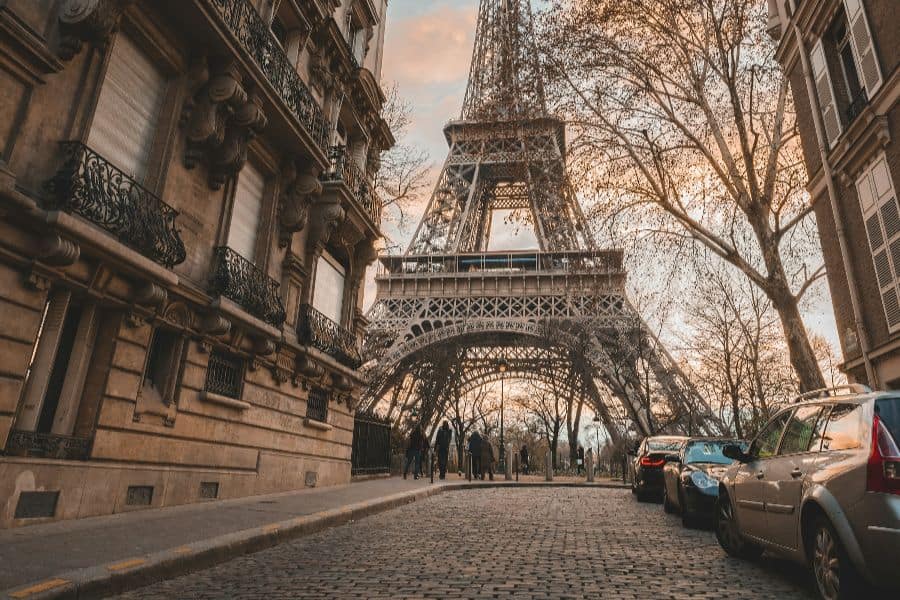
Paris in March offers a fresh twist on the City of Light. The crowds thin out, the early blooms start to peek through, and the city feels like it’s quietly waking up from winter’s chill.
This ultimate travel guide to Paris in March has everything you need to plan your trip.
Weather
The weather in Paris in March sits in the transition between winter and spring; temperatures can swing quite a bit.
Early March, afternoons are around 9-10°C (about 48°F). By late March, it’s more like 12-13°C (mid-50s°F). Every now and then, a warm day sneaks in—sometimes even hitting 19-20°C (upper 60s°F) as the month wraps up.
Overcast days are common, but you’ll still get brighter breaks. Rain falls on 10-14 days, but only about half of those see any real downpour.
Snow is rare, but not impossible; maybe one or two days of flurries if you’re lucky (or not, depending on your mood). By late March, cherry blossoms start popping up, adding that perfect touch of pink to city gardens.
Is Paris Crowded In March?
March really is one of those sweet spots if you want Paris without the tourist stampede. The city is in its low season during March, so you can breathe at the big attractions.
The summer crowds are nowhere in sight. Most families are back in school mode, and the holiday rush is long gone. It’s a window that works out for anyone who doesn’t love waiting in line.
Wait times at the Eiffel Tower and other icons shrink. Museums like the Louvre feel almost spacious. Even the most popular restaurants are easier to get into, and you can snag a table outside on sunny afternoons.
View this post on InstagramA post shared by 📸 Momentos & Paisagens / Moments & Landscapes (@momentos.viagens.paisagens)
Where To Stay
Choosing where to stay in Paris? The city’s 20 arrondissements each come with their own quirks and character.
The Marais is the best overall area to stay in the 3rd and 4th arrondissements, with winding cobblestone lanes, hidden bistros, and more museums than you’ll have time for. Solly Hôtel Paris sits in the middle of all this creative energy, with balcony rooms that spill out onto city views.
First-time visitors might want to check out the 7th Arrondissement near the Eiffel Tower. It’s classic Paris—chic, a little fancy, but not so pricey you’ll need to skip lunch. Académie Hôtel Saint Germain has those French touches and a breakfast that lives up to the hype, all without wrecking your budget.
The 1st Arrondissement drops you right in the thick of it if you’re after easy access to the big sights. Hotel Regina Louvre sits just across from the Louvre, with a terrace and rooms that are bigger than you’d expect.
The 2nd Arrondissement tends to fly under the radar, but honestly, it’s a steal. You get that central Paris feeling without the sticker shock. Kimpton St Honoré Paris offers five-star comfort near the opera house, and the rates are much friendlier than you’d expect for the location.
Best Things To Do In Paris
Paris has way too many things to do for just one trip, but you can’t go wrong starting with the iconic attractions.
The Louvre Museum is packed with treasures (yes, the Mona Lisa’s there), while the Musée d’Orsay houses some of the best Impressionist art you’ll ever see.
A Paris Museum Pass can help you save money if you’re visiting multiple museums, and it often lets you skip ticket-purchase lines. Keep in mind that some attractions still require timed reservations. The Centre Pompidou is hard to miss—modern art in a building that looks like it’s inside out.
Hop on a Seine River cruise for a different view of the city, cruising past bridges and landmarks. Luxembourg Gardens and Tuileries Garden are great for a laid-back stroll or an impromptu picnic.
Up in Montmartre, you get winding streets, a bohemian past, and the white-domed Sacré-Cœur overlooking everything. March brings a few special events: the Semi de Paris half-marathon and Salon de l’Agriculture (France’s biggest agricultural fair).
Day trips from Paris by train are easy. Head out to Versailles Palace for over-the-top gardens and the Hall of Mirrors. Disneyland Paris is an option too, if you’re in the mood for theme park magic.
Sainte-Chapelle’s stained glass is jaw-dropping, and Notre Dame Cathedral is worth a look. Shop for Parisian style at Galeries Lafayette, catch a show at Moulin Rouge, or check out the digital art at Atelier des Lumières.
How To Get Around
Paris has a metro system that’s both ancient and shockingly efficient, so getting around is painless. The Paris metro system runs from early morning until after midnight most days, a bit later on weekends.
Buses are good if you want to see the neighborhoods as you travel. The Batobus, a river boat, stops at major sights along the Seine. And walking is often the best way to soak up the vibe; some neighborhoods are made for it.
If you’re staying a while, look at the Navigo Jour day pass or a weekly Navigo. The Paris Visite pass gives unlimited rides on all public transport—a lifesaver if you’re bouncing all over the city.
Pro tip: Download the RATP app for live transit updates and route planning. March weather is generally mild enough for walking between attractions, so mix up public transport with some good old-fashioned wandering.
What To Pack
March in Paris is a bit of a wildcard. If you’re the planning type, prepare for weather mood swings and bring clothes you can layer or shed as needed.
For a week, toss in a handful of long-sleeve tops (three or four is about right) plus a couple of sweaters or cardigans for backup warmth. Two pairs of jeans or pants will do the trick, and a waterproof jacket or trench coat is a must.
Throw in one or two short-sleeve shirts for those days when the sun decides to show up, especially if your trip lands later in the month. You’ll want at least one outfit that feels a bit special for those evenings out.
As for shoes, stick with a trusty, comfortable pair for walking and something a bit dressier. Seven sets of underwear and socks should cover you, and don’t forget pajamas.
On the essentials front, you’ll want a small umbrella that fits in your bag, sunglasses for those rare sunny spells, a reusable water bottle, and a small bag or backpack for wandering.