- TRAVEL GUIDES
arrow_drop_down
- Canada
- United States
- Sunny Destinations
arrow_drop_down
- VIEW ALL
- BUCKET LIST
- ABOUT
- CONTACT
3-Day Barcelona Itinerary for First-Timers
- Barcelona
- Spain
-
Mar 01
- Share post
Barcelona hands you twisting Gothic alleys, buildings that look like they’ve melted under the Mediterranean sun, and more tapas than you ever thought possible.
This 3-day Barcelona itinerary for first-timers proves you don’t need a month to experience the best of Catalonia’s capital.
Day 1: Exploring the Heart of Barcelona
Kick things off in Barcelona’s historic center, moving from the buzz of La Rambla to the shadowy lanes of the Gothic Quarter, where Roman ruins sit right beside hip cafes and art museums.
Plaça de Catalunya and La Rambla
Plaça de Catalunya marks the crossroads of old and new Barcelona — a sprawling square where nine streets collide and all the city’s energy seems to gather. Metro lines and buses zip out from here, so it’s hard to get lost for long.
Head down La Rambla, the famous tree-lined boulevard stretching to the sea. Flower stalls, street performers, and outdoor cafés line the way. About halfway down, the Mercat de la Boqueria is on your right — locals have been buying fresh produce, seafood, and cured meats here since the 1800s.
Gothic Quarter
The Gothic Quarter sprawls east of La Rambla, a maze of medieval streets dating back two millennia. Dip into Plaça Reial, a palm-filled square with arcaded buildings and lamp posts Gaudí designed before he got famous.
Roman walls from the later Roman era still stand, especially along Carrer del Sots-Tinent Navarro and Plaça Nova. These ancient fortifications once wrapped the original Roman settlement of Barcino, rising up to sixteen meters (about 52 feet).
At Plaça del Rei, centuries of politics played out in the Gothic buildings. The Royal Palace here is where Ferdinand and Isabella supposedly welcomed Columbus after his first trip across the Atlantic. Underground, the Barcelona City History Museum lets you wander Roman ruins right beneath the plaza.
View this post on InstagramA post shared by Barcelona Spain 🇪🇸 Travel | Hotels | Food | Tips (@barcelona.travelers)
Barcelona Cathedral
The Cathedral of the Holy Cross and Saint Eulalia towers over the Gothic Quarter with its 70-meter (230-foot) spire and detailed façade. Construction started in 1298 and dragged on for 150 years, though the entrance wasn’t finished until the 19th century.
Inside the cloister, thirteen white geese wander around, said to represent Saint Eulalia’s age at her death. For a small fee, climb up to the rooftop for views across the old city. There are free visiting hours in the morning and evenings, but access to the choir stalls and rooftop costs extra.
Lunch and Tapas in El Born
East of the Gothic Quarter, El Born is packed with traditional tapas bars and newer restaurants. The area’s name comes from the medieval jousting tournaments that once filled these streets.
El Xampanyet is a time capsule with blue tiles, a marble bar, and a crowd that starts forming before you even realize you’re hungry. Vermouth and cava are a must, and their anchovies and patatas bravas have a cult following.
Bar del Pla keeps things fresh with a menu that shifts with the seasons, but their tuna tartare and Iberian ham croquettes are always worth it.
Lunch hours tend to run from 1 PM to 4 PM, so don’t be surprised if things feel a bit slow before then. That’s just how Barcelona does it.
Picasso Museum
On Carrer Montcada, the Picasso Museum takes up five medieval palaces. The focus here is Picasso’s early years in Barcelona, from his teens through his early twenties, but the collection spans over 4,200 works from his whole career.
The early Barcelona-period pieces show how Picasso moved from classical training into more experimental styles. The standout is the Las Meninas series — 58 versions of Velázquez’s classic, all reimagined by Picasso in 1957.
Buy tickets online to dodge the long lines. You’ll want at least 90 minutes to see the main collection.
Day 2: Antoni Gaudí and Modernist Barcelona
Day two is all about Antoni Gaudí and the modernist movement that gave Barcelona its wild skyline. You’ll hop between some of the city’s most iconic buildings, with plenty of neighborhood character in between.
Sagrada Família
The Sagrada Família is Gaudí’s biggest, boldest project — and yes, it’s still being built after more than 140 years. Gothic and Art Nouveau collide here in a way you won’t see anywhere else.
Snag tickets online well in advance; everyone wants to see this place. Give yourself at least 90 minutes to take in the interior, where tree-like columns shoot up to the ceiling and stained glass floods the space with color. The Nativity Façade is covered with intricate stone carvings of plants, animals, and faces.
If you can, visit in the morning; the east-facing windows turn the place into a kaleidoscope before noon. Audio guides are included and help make sense of Gaudí’s vision.
You can climb the towers for city views, but be ready for lots of stairs or a cramped elevator. Construction is ongoing, with a finish date that’s anyone’s guess.
Hospital de Sant Pau
About a 10-minute walk north from Sagrada Família, the former Hospital de Sant Pau holds its own next to Gaudí’s masterpieces. Architect Lluís Domènech i Montaner designed a complex of 12 pavilions, all linked by tunnels and decorated with mosaics and sculptures.
The hospital operated until 2009; now you can tour the restored buildings. The administration building is a stunner, with tiled details and grand staircases. Gardens between the pavilions make it a relaxing break from the city crowds.
Your ticket lets you wander through several pavilions, showing how Montaner believed beautiful spaces could help people heal. The site covers a few blocks, so comfortable shoes are a good call.
Passeig de Sant Joan
Passeig de Sant Joan is a leafy boulevard connecting Hospital de Sant Pau to your next stop, and it’s a real slice of local life. Families bike along the wide paths, kids dart around playgrounds, and the pace slows down.
It’s about a 20-minute stroll northeast. Cafés along the way are perfect for a coffee break or just people-watching. Sometimes, street markets pop up on weekends with local produce and crafts.
Park Güell
Park Güell started as a failed housing project and ended up as Gaudí’s playground — wavy benches covered in broken tile mosaics, gingerbread houses, and columns that look like they grew out of the ground.
The Monumental Zone — with the famous mosaic lizard and serpentine bench — requires a timed ticket. The rest of the park is open to everyone. Arrive a bit early, since it’s a hike from the entrance to the main sights and the paths are mostly uphill.
The mosaic bench on the terrace gives you sweeping views of Barcelona and the sea. Gaudí and his collaborator Jujol invented the trencadís (broken tile) style that covers so much here.
Late afternoon is best if you want softer light and cooler temperatures. The park’s on a hill, so expect some climbing. If you’re not up for a hike, buses like the H6 or the blue tourist bus stop near the upper entrance.
Gràcia Neighborhood
From Park Güell, wander downhill into Gràcia — a neighborhood that used to be its own village until Barcelona swallowed it up in 1897. The narrow streets spill into plazas where everyone gathers for a drink or a chat at outdoor tables.
Plaça del Sol buzzes in the evenings, filled with people sharing drinks and stories. Plaça de la Virreina is quieter, with a pretty church and more shaded cafés. Along the way, you might stumble into vintage shops, indie boutiques, or tiny art studios.
If you’re curious about Gaudí’s early work, drop by Casa Vicens. The colorful tiles and Moorish influences show where his style began, before he went fully organic with his later buildings.
Mercat de la Concepció
End your Gaudí day at this covered market in Eixample. Built in 1888, it’s a classic iron-and-glass hall filled with vendors selling fresh produce, seafood, meats, cheeses, and ready-to-eat bites.
Flower stalls at the entrance greet you with a burst of color and scent. Inside, you can pick up picnic supplies or grab small plates and vermouth at the stand-up counters.
Most shoppers here are locals, so prices stay fair. Vendors start closing up after 8 PM Tuesday through Friday, and after 3 PM on Mondays and Saturdays. On Sundays, the place is shuttered.
Day 3: Seaside and Montjuïc
The last day is a blend of architectural eye-candy, beach time, and hilltop wandering. You’ll start with some of Gaudí’s wildest designs, soak up the Mediterranean, then head up Montjuïc for museums, city views, and maybe a light show if you time it right.
Casa Batlló
Casa Batlló on Passeig de Gràcia is Gaudí at his most playful. The façade looks like it’s built from bones and dragon scales, with balconies like skulls and a roof that ripples like a dragon’s back.
Inside, everything curves — walls, windows, even the fireplaces. The blue-tiled light well glows, and the Noble Floor has famous mushroom-shaped hearths. Look out onto the busy avenue below and try to imagine what Gaudí was thinking.
Book tickets online at least a day ahead to avoid the line. The augmented reality guide is surprisingly fun, overlaying Gaudí’s original ideas as you walk through. Early mornings are quieter, and the light’s just right for photos.
Don’t miss the rooftop terrace for close-up views of the chimneys and ceramic details. Plan about an hour to see it all without rushing.
Passeig De Gràcia
Running through the Eixample district, Passeig de Gràcia is Barcelona’s showcase for modernist architecture and high-end shopping. Luxury brands like Chanel and Louis Vuitton sit next to Spanish staples such as Zara and Mango, all lined up beneath leafy trees and elegant street lamps.
Casa Milà (La Pedrera) rises a few blocks from Casa Batlló, its stone facade rippling like waves, with iron balconies twisting into abstract shapes — nothing like your average apartment block.
Both buildings have earned a spot on UNESCO’s World Heritage list, and it’s easy to see why when you’re standing on the sidewalk, craning your neck.
Hexagonal pavement tiles underfoot were designed by Gaudí himself, and if you’re into photography, the 1.6-kilometer stretch is a goldmine for capturing everything from ornate facades to quirky street scenes.
Barceloneta Beach
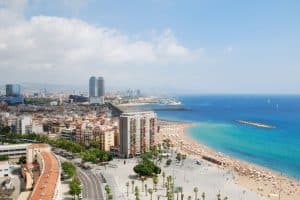
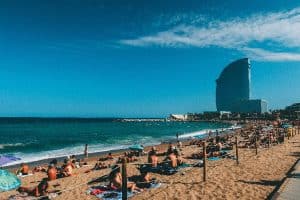
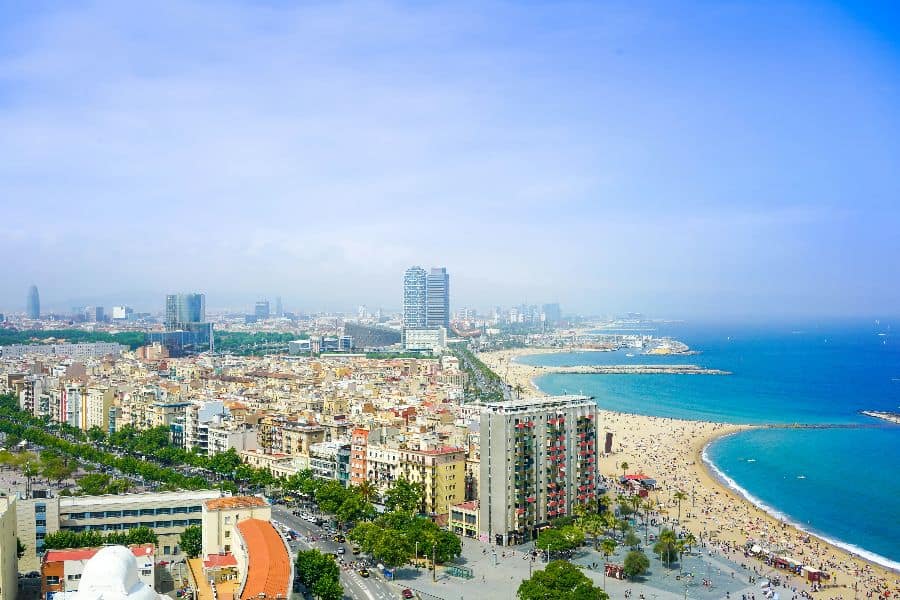
Barceloneta Beach unfurls for just over a kilometer along the Mediterranean, with golden sand, swaying palms, and a boardwalk buzzing with energy. It’s only about a 15-minute stroll from Las Ramblas, so you can go from city crowds to salty air pretty fast.
Chiringuitos — classic beach bars — dot the boardwalk, pouring cold drinks and serving up seafood. Rent a lounger and umbrella, or you can just toss your towel down on the sand for free.
Vendors wander by with fresh fruit and snacks, and the water is usually calm enough for swimming from June through September, hovering in the low to mid-20s Celsius (about 68–73°F).
Showers, changing rooms, and bathrooms are scattered along the shore. Just keep an eye on your stuff; it’s easy to get distracted by the sea and end up missing a bag.
Port Vell Promenade
Port Vell’s promenade links Barceloneta Beach to the old harbor, weaving past modern yachts and weathered boats. The wooden Rambla de Mar bridge floats you out to Maremagnum, a shopping and entertainment hub perched right over the water.
The Columbus Monument, a 60-meter (197-foot) column, marks the spot where Columbus reported back to Queen Isabella after his first voyage. There’s an elevator to a viewing deck at the top if you want to see the city from above.
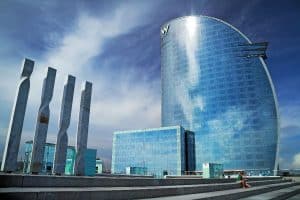
Views here stretch to the W Hotel’s sail-shaped silhouette and the cable car gliding up to Montjuïc. If you’re hungry, seafood restaurants along the port offer paella and grilled fish — delicious but not exactly a bargain compared to places farther from the water.
Montjuïc Cable Car Ride
The Telefèric de Montjuïc floats you up from the Montjuïc park/funicular area (connected via Paral·lel) to the castle crowning Montjuïc hill. There are three stations along the way, each with its own access to gardens, museums, and panoramic viewpoints.
Cabins are glass-enclosed, fit up to eight people, and run every few minutes. The ride lasts about 10 minutes, covering 750 meters and climbing 84 meters (275 feet). As you rise, the view unfolds — first the port, then the city, and finally the Mediterranean stretching out beyond.
The middle station, Mirador, is closest to Barcelona’s outdoor attractions. If you want to walk down through Montjuïc’s parks, just buy a one-way ticket. The cable car runs all year, except when strong winds close the line.
National Art Museum Of Catalonia (MNAC)
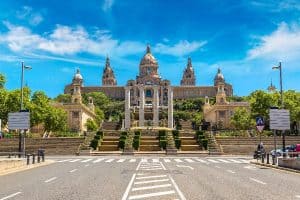
Perched in the National Palace, MNAC houses a sweeping collection of Catalan art that stretches from medieval times to the mid-20th century. It’s a huge place, but the Romanesque section is a standout, with frescoes rescued from remote Pyrenean churches.
Gothic altarpieces shimmer with gold, while Renaissance and Baroque galleries show off works by El Greco, Velázquez, and Zurbarán. The modern section highlights Catalan painters like Ramon Casas and Santiago Rusiñol.
Give yourself at least 90 minutes for the highlights. Even if you’re not in a museum mood, the terrace offers sweeping city views — the rooftop viewpoint is included with admission, or you can grab a small rooftop-only ticket.
Magic Fountain Of Montjuïc
The Magic Fountain has been putting on a show since the 1929 World’s Fair, shooting water up to 50 meters (164 feet) high, lit by colorful lights and set to music. Shows run from Thursday to Saturday evenings at 8:00pm, with schedule shifting depending on the season.
Each show lasts about 20 minutes and blends everything from classical tunes to pop hits. People start grabbing spots on the steps leading up to MNAC about 15-20 minutes before the show starts.
The fountain sits at the foot of Montjuïc, right by Plaça d’Espanya metro. No tickets or reservations — just show up and enjoy.
Poble-Sec Tapas Crawl
Poble-sec hangs out at the foot of Montjuïc hill, quietly staking its claim as Barcelona’s go-to neighborhood for bar hopping. Carrer de Blai does most of the heavy lifting, with locals spilling out onto the street.
Quimet & Quimet is tiny, almost comically so. Folks have been squeezing in here for generations; the family behind the counter still keeps things humming along. Montaditos are a must — little open-faced sandwiches stacked with smoked salmon, honey, and caviar.
La Tasqueta de Blai goes big on pintxos — Basque-style tapas perched on bread, each one stabbed with a toothpick. Just grab a plate, help yourself at the bar, and pay for your stack of toothpicks at the end.